Showing posts with label 1st Line. Show all posts

Monday, 12 May 2025

Olight Arkfeld Ultra vs. Pro: Which Premium EDC Flashlight Is Right for You?


Olight Arkfeld Ultra vs. Pro: Which Premium EDC Flashlight Is Right for You?

When it comes to premium EDC (Every Day Carry) flashlights, Olight’s Arkfeld series stands out for its sleek, flat design and multifunctionality. The Arkfeld Ultra (1400 lumens) and Arkfeld Pro (1300 lumens) are two of the most advanced models in the lineup, combining powerful white light, UV, and laser capabilities in a compact package. Whether you’re an outdoor enthusiast, a professional requiring UV for inspections, or an EDC gearhead, choosing between these two models can be challenging.

In this blog, we’ll compare the Arkfeld Ultra and Pro head-to-head, examining their brightness, battery life, build quality, features, and pricing. Our goal is to help you decide which flashlight best suits your needs. Let’s shine a light on the details!


The Arkfeld Duo: A Quick Overview

The Arkfeld Ultra and Pro are designed for versatility, featuring a “TV remote” shape that slips easily into a pocket or bag. Both offer a foody beam for wide-area illumination, a magnetic tail for hands-free use, and IPX7 water resistance. Here’s the rundown:


  • Arkfeld Ultra (1400 lumens): The top-tier model with maximum brightness, a rugged O-aluminum body, and a glass lens for enhanced durability. It’s a 3-in-1 powerhouse with white LED, UV, and laser.


  • Arkfeld Pro (1300 lumens): A nearly identical 3-in-1 flashlight with slightly lower output, standard aluminum construction, and a lower price point.

Let’s break down how they compare across key categories.

1. Light Output and Modes: Ultra Bright or Just Bright Enough?

Brightness is the heart of any flashlight, and both the Ultra and Pro deliver impressive performance.

  • Arkfeld Ultra (1400 lumens):

    • White LED: Boasts a class-leading 1400 lumens, ideal for lighting up a campsite or a large workspace. It uses an Osram P9 LED with a flood TIR optic, available in Cool White (5700-6700K) or Neutral White (4000-5000K).

    • Modes: Turbo (1400 lumens, steps down to ~420 lumens after 1.5 minutes), High (420 lumens), Medium (100 lumens), Low (15 lumens), Moonlight (1 lumen, up to 11 days), and Strobe.

    • Beam Distance: Reaches 112 meters, with a peak intensity of ~3125 cd.

    • Extras: Includes a 900mw 365nm UV LED (perfect for counterfeit detection or stain checks) and a Class 3r green laser (≤ 5mw, visible up to 300 feet at night). You can use the white LED and laser simultaneously by activating the laser first and double-pressing.

    • Drawback: The Turbo mode drops quickly, limiting sustained high output.

  • Arkfeld Pro (1300 lumens):

    • White LED: Outputs 1300 lumens, just 100 lumens shy of the Ultra, using the same Osram P9 LED and floody optic.

    • Modes: Turbo (1300 lumens, sustains 3-4 minutes), High (420 lumens), Medium (100 lumens), Low (15 lumens), Moonlight (1 lumen, 11 days), and Strobe.

    • Beam Distance: 102 meters, with ~2608 cd (measured up to 3223 cd in tests).

    • Extras: Matches the Ultra’s 900mw 365nm UV LED and Class 3r laser, offering the same simultaneous-use capability.

    • Advantage: The longer turbo duration makes it better suited for tasks requiring sustained brightness.

Verdict: The Ultra’s 1400 lumens and 112-meter throw give it a slight edge for illuminating larger areas, but the difference is subtle due to the floody beam. The Pro’s longer Turbo sustainment (3-4 minutes vs. 1.5 minutes) makes it more practical for extended use. Both share identical UV and laser performance, making them equally versatile.

2. Battery and Charging: Power That Lasts

A reliable battery is crucial for EDC, and both models use a built-in Lithium Polymer cell with Olight’s magnetic charging system.

  • Arkfeld Ultra:

    • Battery: 1500mAh (5.55 Wh), delivering up to 11 days on Moonlight, 5 hours on UV, or 61 hours on laser.

    • Charging: Magnetic USB-A cable (~0.9A), fully charges in ~2.5 hours.

    • Indicator: 4-LED display shows battery status.

  • Arkfeld Pro:

    • Battery: Identical 1500mAh, offering the same runtimes (11 days Moonlight, 5 hours UV, 61 hours laser).

    • Charging: Slightly slower at ~0.88A, taking ~2 hours 43 minutes.

    • Indicator: Same 4-LED setup.

Verdict: The Ultra and Pro are evenly matched with their 1500mAh batteries, providing excellent endurance for long trips. The proprietary USB-A charging cable is reliable but less convenient than USB-C, a common critique for both models in 2025.

3. Design and Build: Built to Last?

Both flashlights share Arkfeld’s signature flat design, but their materials and durability differ.

  • Arkfeld Ultra:

    • Size/Weight: 120 x 27 x 16mm, 119g.

    • Material: O-aluminum alloy, 1.77x harder than 6061-T6 aluminum and stronger than titanium, paired with a scratch-resistant glass lens.

    • Design: Features a checkered grip for secure handling, a two-way pocket clip, a magnetic tail, IPX7 water resistance (1m submersion), and 1m drop resistance. A beveled face protects the control dial.

    • Colors: Olive Green, with potential limited editions.

    • Highlight: Its rugged build can withstand extreme tests, like being run over by a vehicle.

  • Arkfeld Pro:

    • Size/Weight: Same 120 x 27 x 16mm, but lighter at 111g.

    • Material: 6061-T6 aluminum with a plastic lens and serrated side texture for grip.

    • Design: Similar flat shape, two-way clip, magnetic tail, IPX7, and 1m drop resistance.

    • Colors: Black, Orange, Zombie Green, Paw Edition, and more.

Verdict: The Ultra’s O-aluminum and glass lens make it the tougher choice for harsh environments, while the Pro’s standard aluminum is still durable but less premium. The Ultra’s checkered grip feels grippier, but the Pro’s 8g lighter weight is a slight win for pocketability.

4. Features and User Interface: Seamless Operation

Both models feature an intuitive interface and 3-in-1 functionality, setting them apart as versatile EDC tools.

  • Arkfeld Ultra:

    • Controls: A rotating dial selects white LED, UV, or laser; a central button handles on/off (press), brightness cycle (hold), Turbo (triple-press), Strobe (double-press), and Moonlight (long-press).

    • Features: 3-in-1 design (white, UV, laser), simultaneous white LED + laser, and lockout mode (hold ~1s to unlock).

    • Unique: Beveled dial protection enhances durability.

  • Arkfeld Pro:

    • Controls/Features: Identical to the Ultra, with the same 3-in-1 versatility and operation.

    • Note: Pioneered the 3-in-1 concept in the Arkfeld series.

Verdict: Both offer a user-friendly experience with identical controls and 3-in-1 functionality. The Ultra’s beveled dial adds a minor durability edge, but the Pro matches it in practicality.

5. Real-World Applications: Where They Shine

The Ultra and Pro are designed for diverse scenarios, from outdoor adventures to professional tasks.

  • Arkfeld Ultra:

    • White LED: Brightest at 1400 lumens, perfect for hiking, camping, or illuminating large spaces (e.g., a backyard or worksite).

    • UV LED: Professional-grade (900mW, 365nm) for detecting counterfeit currency, identifying minerals, or checking hotel room cleanliness.

    • Laser: Class 3R for presentations, pet play, or pointing at objects up to 300 feet at night.

    • Best For: Rugged EDC in demanding environments where durability is key.

  • Arkfeld Pro:

    • White LED: Nearly as bright at 1300 lumens, suitable for most outdoor or work tasks.

    • UV/Laser: Identical to the Ultra, ideal for inspections or laser-based tasks.

    • Best For: Versatile EDC for users who want premium features without the Ultra’s higher cost.

Verdict: The Ultra excels in rugged scenarios thanks to its tougher build, while the Pro is equally capable for most tasks at a lower price. Both are Swiss Army knives for EDC.

6. Price and Value: Is the Ultra Worth the Premium?

Price is a deciding factor, so let’s see how these two stack up.

  • Arkfeld Ultra ($96-$120):

    • Price: ~$96 (Olight sales) to $120 (Amazon, retailers like PhotonLight).

    • Value: The O-aluminum, glass lens, and 1400 lumens justify the cost for heavy-duty use, but the short Turbo (1.5 minutes) and minor lumen gain over the Pro may not impress casual users.

    • Perks: Lifetime warranty (for purchases after January 1, 2023) and often bundled with extras (e.g., Baton Turbo).

  • Arkfeld Pro ($90-$130):

    • Price: ~$90 (BrightGuy) to $130 (Amazon Canada).

    • Value: Delivers 95% of the Ultra’s performance (1300 lumens, same UV/laser) at a lower cost. Longer Turbo duration adds practicality.

    • Perks: Same lifetime warranty, frequent discounts (e.g., “10OFFTD” for 10% off).

Verdict: The Pro offers the best value for most users, matching the Ultra’s versatility at a slightly lower price. The Ultra’s premium materials are worth it for those needing maximum durability, but the cost difference may not justify the minor performance gains for everyone.

7. What Users Are Saying

  • Arkfeld Ultra: Users love its tank-like O-aluminum build and 3-in-1 versatility, praising its ability to handle tough conditions. Some criticize the short Turbo duration and bulky clip (no lanyard hole). Reddit’s r/flashlight community calls it “overbuilt for EDC” but appreciates the glass lens for clarity.

  • Arkfeld Pro: Highly regarded for its value and multifunctionality. Users prefer its lighter weight and longer Turbo sustainment over the Ultra, though the proprietary charging cable draws some complaints.

8. Which Arkfeld Should You Buy?

Here’s the final word:

  • Choose the Arkfeld Ultra ($96-$120) if you need:

    • Maximum durability (O-aluminum, glass lens) for rugged use (e.g., camping, professional inspections).

    • The brightest output (1400 lumens, 112m throw), despite a short Turbo duration.

    • 3-in-1 versatility (white, UV, laser) with a premium, long-lasting build.

  • Choose the Arkfeld Pro ($90-$130) if you want:

    • Near-identical performance (1300 lumens, same UV/laser) at a better price.

    • 3-in-1 functionality for most EDC tasks, with longer Turbo sustainment.

    • A slightly lighter build (111g vs. 119g) for daily carry.

Final Thoughts

The Olight Arkfeld Ultra and Pro are both stellar EDC flashlights, offering powerful white light, professional-grade UV, and a handy laser in a compact, flat design. The Arkfeld Pro is our top pick for its outstanding value, delivering nearly all the Ultra’s features at a lower cost. If you prioritize ruggedness and a slight brightness boost, the Ultra is your go-to, especially for demanding environments.

Ready to pick your flashlight? Visit Olight’s official site (https://www.olight.com) or retailers like Amazon and BrightGuy. Keep an eye out for discounts like “10OFFTD” for 10% off. Let us know in the comments which Arkfeld you’re choosing!

PGD ARCH GEN3 Helmet: A Professional’s Initial Perspective


When your helmet is more than just gear—it’s a lifeline—you need something you can trust. The PGD ARCH GEN3 Ballistic Helmet is designed for serious users: military, law enforcement, and security operators who demand uncompromised performance. But gear enthusiasts, don’t tune out—there’s plenty here for you too. I’ve been hands-on with this helmet, and I’m here to share my take, with more insights to come as I put it through its paces.

To give you some context, I’ve worn my share of helmets across decades of service. I deployed to the Balkans in the early 1990s with a World War II-era M1 helmet, later upgraded to the PASGT (Personnel Armour System for Ground Troops) Kevlar helmet—standard U.S. military issue through the '80s and '90s. Upon re-enlistment, I was issued the CG634, a Canadian Armed Forces helmet based on the French Gallet TC-3, offering NIJ Level 3A ballistic protection. It was my companion for two Balkan deployments, though comfort was a constant struggle. For three combat tours in Afghanistan, I heavily customized it, swapping the internal suspension for an Oregon Aero ballistic pad system—it now sits proudly on my fireplace mantle. I’ve also used the Ops-Core Base Jump on multiple NATO SOF training courses and wrapped up my service with the CM735, a full-cut combat helmet with a suspension akin to the CG634. Point is, I’ve worn a lot of helmets. Ballistic protection paired with comfort and sound performance is critical for staying sharp on long ops.


Let’s start with comfort. If you’re wearing a helmet for hours—whether it’s a long patrol, an extended operation, or a direct action—fatigue can creep in fast. The ARCH GEN3 counters that with a suspension system that’s genuinely top-notch. The memory foam padding molds to your head, and the dial retention system locks in a secure fit with a quick twist. No pressure points, no constant adjustments—it stays put. For serious users, this is a game-changer: in the field, distractions can be costly. This helmet keeps your focus where it belongs.

What’s more, the snug fit from the memory foam padding helps dampen external noise, letting you stay locked in even amid chaos. Whether it’s the clamour of urban ops or the sounds of an extended firefight, this subtle sound reduction enhances concentration without isolating you entirely—a practical edge for extended wear.

When it comes to ballistic helmets, protection is paramount—and the PGD ARCH GEN3 delivers in spades, particularly when measured against NATO’s exacting STANAG 2920 standard. STANAG 2920 is the go-to protocol for assessing a helmet’s ability to protect against fragmentation and shrapnel, simulating the real-world threats posed by explosives and indirect fire. It’s a benchmark that separates reliable gear from the rest, and the ARCH GEN3 rises to the challenge.

The helmet is engineered to stop 17-grain (1.1-gram) fragments travelling at speeds up to 700 meters per second—a level of performance that reflects its advanced composite materials and meticulous design. This V50 rating (the velocity at which 50% of fragments are stopped) isn’t just a number; it’s a lifeline for operators facing the chaos of IEDs, artillery, or grenade blasts, where shrapnel can strike with lethal force. To put this in perspective, 700 m/s is roughly twice the speed of sound, underscoring the helmet’s capability against high-velocity threats common in modern combat zones.

But the ARCH GEN3 doesn’t stop at fragment resistance. Its construction also minimizes backface deformation (BFD), the denting or bulging on the helmet’s interior that occurs when it absorbs an impact. Excessive BFD can transfer energy to the skull, risking blunt force trauma or concussions— injuries that can sideline even the toughest operators. By reducing BFD, the ARCH GEN3 ensures that the energy from a fragment strike is dissipated effectively, offering a dual layer of protection: stopping the threat and safeguarding the wearer from secondary effects.

This performance ties directly to STANAG 2920’s focus on fragment simulation testing (FST), where standardized projectiles mimic battlefield hazards. The helmet’s ability to excel in this area is a result of its multi-layered ballistic shell and optimized geometry, which work together to distribute impact forces across a wider area. For serious users, this translates to confidence in gear that can handle the unpredictable, whether it’s a close-quarters explosion or a distant blast scattering debris.

Beyond STANAG 2920, the ARCH GEN3’s design aligns with NATO’s broader emphasis on survivability, complementing its NIJ Level IIIA rating against handgun rounds. While STANAG 2920 zeroes in on fragments, the helmet’s holistic protection makes it a versatile choice for missions where threats range from small arms to improvised explosives. For professionals, this isn’t just gear—it’s a calculated investment in staying operational, no matter the environment.


Next, set up. The manual offers clear guidance on arranging the Velcro for the helmet cover, but I kept it minimal, just a few strips to secure the PGD cover. It’s sleek, functional, and low-profile. My advice for pros? Stick to the manufacturer’s setup unless you’ve got a specific tweak in mind—performance trumps experimentation. What stood out, though, was PGD’s support. I fired off a question and got a fast, practical reply. For those whose gear is a matter of safety, that reliability from the company behind it is invaluable.

The helmet-mounted rail setup also shines in terms of sound-related and light customization. You can easily attach communication devices or hearing protection, which is vital for clear communication or shielding your ears in noisy environments. Additionally, rail-mounted lights can be securely fastened. It’s a subtle touch that can make a significant difference when managing multiple demands on a mission.

Flexibility is where the ARCH GEN3 really shines. I transferred accessories—such as night vision mounts and headset adapters—from an Ops-Core bump helmet to this one in minutes. The mounting points sync perfectly with industry-standard gear, so you’re not wrestling with compatibility when time’s tight. For professionals, this means seamless shifts from training to ops or quick loadout changes mid-mission. Gear enthusiasts, here’s your draw: the front shroud and side rails are tough and ready for anything—think Wilcox mounts, Peltor headsets, or tactical lights. It’s a versatile platform built for your kit.

The high-cut design also enhances its sound quality, pairing effortlessly with over-ear communication headsets to ensure clear communication without sacrificing protection. Plus, it minimizes obstruction to ambient sounds, sharpening your situational awareness—a must in dynamic settings. Whether you’re shouting orders or catching faint cues, the ARCH GEN3 keeps you dialed in without boxing you out.

PGD’s customer service deserves a shoutout. I sent a quick question and got a prompt, friendly, and dead-on helpful response. For serious users, this isn’t just nice to have—it’s a force multiplier. When your gear’s performance can tip the scales on a mission, knowing the manufacturer has your back brings absolute confidence. If you have a question about optimizing your setup for sound or anything else, PGD’s team is there to support you.


This is just the start. I’m taking the ARCH GEN3 into real-world scenarios and will keep you posted with regular updates. Serious users can expect practical takes on how it holds up under pressure. Gear enthusiasts, you’ll get the deep dive on specs, durability, and more. Stay tuned—there’s plenty left to unpack.

So far, the PGD ARCH GEN3 delivers for serious users: it’s comfortable for the long haul, adaptable to mission demands, and backed by a team that’s on it. If you’re a professional who needs gear you can rely on, this helmet’s worth your attention. For gear enthusiasts, its innovative design and customization options give you plenty to dig into.

Whether you’re a seasoned operator in high-stakes scenarios or an enthusiast savouring the details, the PGD ARCH GEN3 stands out. Its mix of comfort, customization, and adaptability—paired with sound-enhancing features—makes it a top contender. I’ll keep testing and share more soon—until then, stay safe and keep your gear game strong.

Monday, 9 January 2017

The Pelican 1920, Gen2 vs Gen 3.


Quite a few months ago, I picked up a Pelican 1920 Generation 2 at Mountain Equipment Co-op. This new incarnation was long awaited upgrade to the 1910-20 series of pocket flashlight making the family more competitive with other choices on the market. Both the 1910 and the 1920 Generation 2 were released in Spring of 2014. I finally got around to picking one up in May of 2016.

Monday, 5 December 2016

The CTOMS Covert Ankle Medical Kit or C-MAK


Not everyone can carry a med pouch in their everyday situation on their body. It is just not realistic. Everyday carry bags can be lost or not on your person during disasters, dangerous encounters and active shooter attacks. On-the-body carry is always preferable to off-the-body. This is why the Covert Ankle Medical Kit (C-MAK) is such a viable option for many people.

Wednesday, 3 August 2016

CTOMS Emergency Trauma Aid Kit (E-TAK)


A few months ago I ordered a CTOMS Emergency Trauma Aid Kit Base or E-TAK™. Stored in a Ziploc bag, it is perfect to throw in your glove box, range bag or go bag.  As the contents of the kit are fundamental to Tactical Trauma Care, the E-TAK can be used as the basis for building or replenishing kit with in an active team.

Monday, 7 March 2016

Surefire P2X Fury

Ultra-High Dual-Output LED Flashlight


Please Note: Since the time I purchased this product, Surefire has increased the high output range of the PX2 Dual Mode to 600 Lumens over 500 Lumens.


Friday, 4 September 2015

Perroz Designs CoolMax Performance Shirt

A photo posted by whiskeydeltagulf on

Perroz Designs is located in Toronto, Ontario. It is wholly Canadian owned and operated tactical gear manufacturer. Recently, I received one of their CoolMax Performance Shirts as part of an introduction to the company’s products.

Monday, 6 July 2015

NUKOHEAD from Nukotools - Leave an Impression


I would like to thank 2 Cent Tactical for the introduction to Nukotools and the general concept of non-metallic ‘multipurpose’ key fobs. The fact that the law is very specific about metallic construction in Canada with regards to nucks.

Monday, 17 November 2014

5.11 Tactical Vest


Un:a prefix meaning “not,” freely used as an English formative, giving negative or opposite 

Uniform: [yoo-nuh-fawrm], noun, an identifying outfit or style of dress worn by the members of a given profession, organization, or rank.

The ubiquitous 5.11 Tactical Vest has grown in popularity from its covert beginnings with various military and law enforcement units to almost a standard of dress within many private contracting companies and citizens that legally conceal carry. In the Sandbox, it is the un-uniform. While not wearing an official military uniform, it is very popular with the contracting crowd. There are times when this quick recognition is good.

Monday, 3 March 2014

CTOMS 1st Line, a blast from the past.


This is a review of a discontinued CTOMS pouch. Though CTOMs still has a few of these excellent Treatment Kits for sale on their website. The 1st Line was integrated into a layered approach to combat trauma during my second deployment to Afghanistan. On this deployment, I was part of a small team embedded with the Afghan National Police to provide training, liaison and combat power to their Police Sub-Stations, patrols and operations. This was a few years ago, so some of the medical kit in the pouch is outdated. Always check the current recommendations by the CoTCCC or CCCWG before any deployment.

Monday, 8 July 2013

INFORCE 6vx

With the speed of modern operations, lightweight, compact, robust equipment that packs lots of punch is the rule, not the exception. Advanced technology and weapons have made allied forces highly mobile and more lethal. Between carrying those advanced technologies, the batteries required for it and modern ammunition loads, weight and space are at a premium. It is a game of ounces. Ounces equal pounds and pounds equal pain. Handheld lights are no exception. Modern handheld tactical lights must be compact, lightweight  robust and longer lasting with a blinding output.


Monday, 27 May 2013

CTOMS FrontLine with 3 Magazine Shingle


No more leg bags...

Last deployment, I used a CTOMS FrontLine with 3 Magazine Shingle as my first line treatment pouch. A vest mounted low profile combination magazine and first line medical pouch.

Traditionally, Medics and Tactical First Responders have used a leg bag as their first line medical treatment pouch. Defence RD Canada released a study stating that any gear strapped to the legs of a provider increase fatigue and increase energy expended by a whopping 15%. Per Leg! That is a significant percentage of increase that needs to be addressed. Tactical operations and tactical medical incidents are exhausting enough without fighting your gear. Besides, I have never really like subloads or strapping on my legs. 

Monday, 15 April 2013

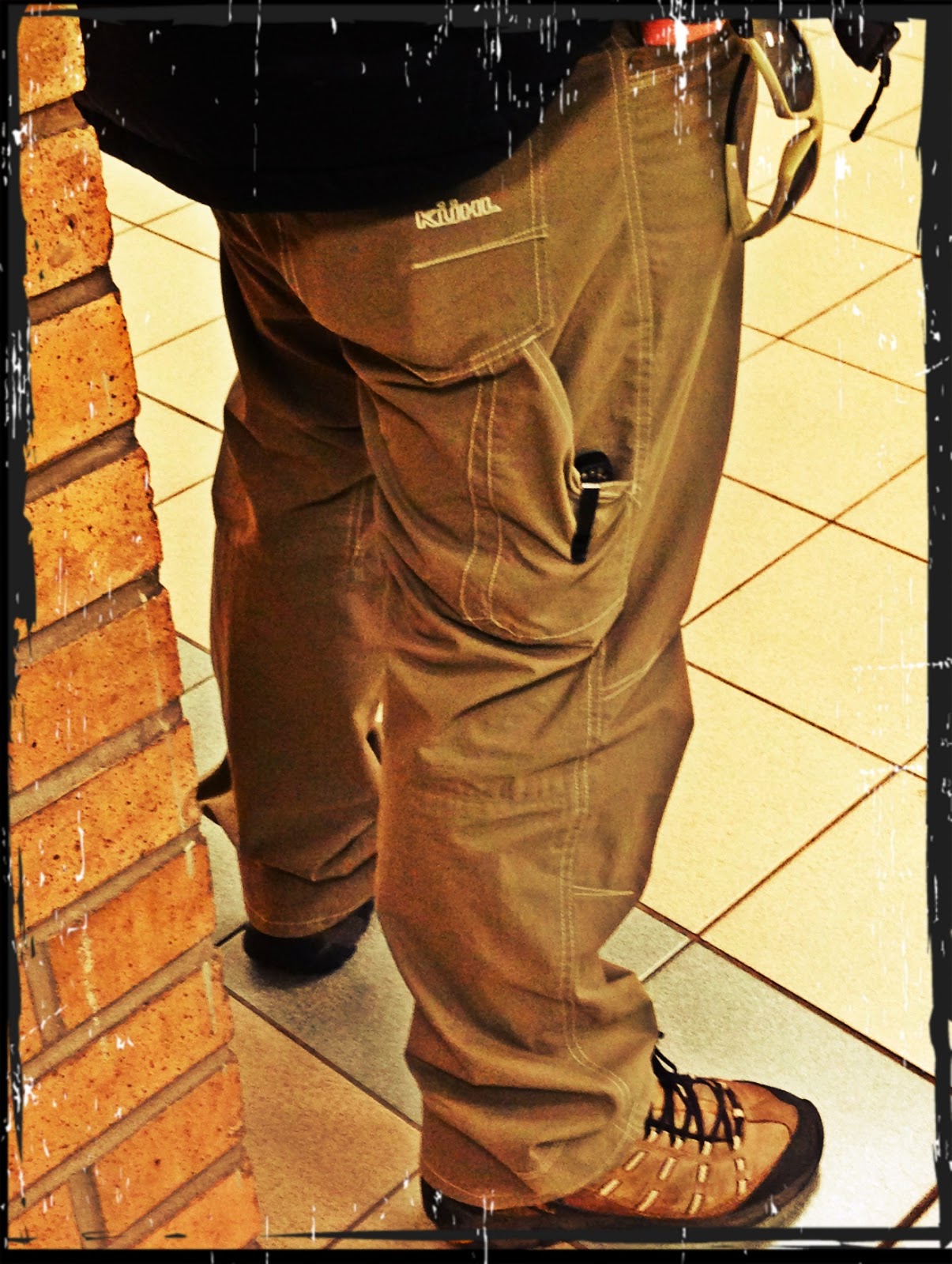
Kühl Pants, tactical crossover...


Kühl Revolvr Pants

Passing through the Dubai International Airport (DXB)in 2006 to 2012 was a parade of 5.11 Tactical models all vying for attention as the various sizes and shapes of contractors made their way to O’Brien’s for their first pint. This lack of discretion extends to other locales as well. I was in an establishment in Bangkok, Thailand having a quiet iced Singha with an expatriate friend. When in walks a ‘farang’ (that is Thai slang for foreigner) with a Thai bar girl under each arm still wearing his 5.11 pants, rigger belt, desert boots and his company’s polo shirt. This kind of dress and deportment does little to maintain a low profile while travelling, whether insertion or exfiltration  from your operational environment. I have not worked the civilian side of the house, yet. Though, in my current employment, I have had to make international movement in civilian attire while moving through areas of known support for our adversaries and in medium to high threat countries. I attempt to keep a lower profile wearing non standard apparel; in an effort to be less of a target for who wish us harm and to distance myself from those who do not.

Monday, 14 January 2013

Pelican 1910 Flashlight


Copyrighted 2013As a tactical medic, I like to have lots of lights available to me. Tactically, I prescribed to the Tactical Trinity of Lights; a dedicated weaponlight, a vest/belt kit handheld and a uniform pocket backup light. For medical work, I have both a helmet light and a vest mounted light. As part of my Every Day Carry or EDC, I always have, at least, a light capable of navigating by. For the last year that light has been the Pelican 1910. It is small, unobtrusive and can be carried, even in business attire, without drawing attention. Is it a primary tactical light? NO! It is more of a tertiary tactical light or light duty EDC flashlight.

Friday, 7 December 2012

Tactical Belt Review: CTOMS QR 1.5"


The CTOMS QR 1.5” Belt


A climbing rated quick release Cobra buckle
Click on to Enlarge


The CTOMS QR (Quick Release) 1.5” Belt was designed by the talented staff at CTOMS for specific government client intended for tactical work in a foreign theatre.  It is a different take on the traditional 'riggers' style belt with increased rigidity for bearing equipment and the added capability to be an extraction belt, if required. A climbing rated quick release Cobra buckle replaces the old style webbing friction buckle. The Cobra buckle allows for faster donning and doffing of the belt and prolongs service life preventing wear on the running end of the webbing. 


Thursday, 1 November 2012

CTOMS Tourniquet Pouch, Gen II

CTOMS Tourniquet Pouch 
Gen 2
During Care under Fire (CuF), the tactical situation is still active; meaning you are engaged in combat or under an impending threat. Accurate fire superiority and simple quick medical interventions are the most viable forms of treatment at this time. The only equipment available to a responder, at this time, would be the casualties’ tourniquet and their own hands.  Stopping life-threatening extremity bleeds with a tourniquet and use of recovery position are the only interventions done during this phase. These are simple and rapidly executed interventions that will save a good portion of battle casualties.